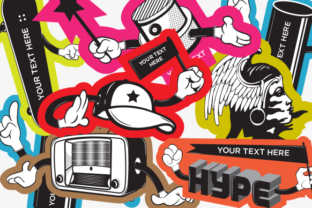
Unlocking Potential with Hand-Drawn Vector Illustrations
In the world of digital design, we often start with pixels, code, or pre-made assets. But there’s an undeniable magic that comes from a line that began with a pencil on paper—a texture, a slight imperfection, a soul that’s hard to replicate digitally from scratch. This is the core of the Various Illustrations set. It’s not just a collection of graphics; it’s a curated library of seven distinct, hand-drawn concepts, meticulously crafted by hand before being refined into crisp, versatile vector files. This process preserves the organic, human touch that makes designs feel authentic and relatable, while providing the technical flexibility modern projects demand.
The Art of Authenticity: More Than Just Clip Art
What sets these illustrations apart is their personality. Each of the seven designs carries its own story, style, and visual weight. You might find a whimsical botanical sketch that feels like it was torn from a naturalist’s journal, a bold graphic motif with a mid-century modern flair, or a playful character that sparks immediate connection. The style isn’t monolithic; it’s a collection of voices. This variety is its greatest strength, offering a toolkit for diverse creative needs rather than a single, limiting aesthetic. The visual appeal lies in this authenticity—the lines aren’t perfectly symmetrical, the fills have subtle variations, and the overall feel is approachable and genuine. This isn’t sterile, corporate clip art; it’s design assets with character.
From Paper to Pixel: The Vector Advantage
The journey from a hand-drawn sketch to a vector format is a critical one. The initial drawing captures the emotion and spontaneity, while the vector conversion ensures scalability without loss of quality. This means the same illustration can be printed as a tiny icon on a sticker or blown up to cover the back of a hoodie with perfect clarity. For anyone working in print-on-demand, this is non-negotiable. The set’s utility is built into its format, making it a practical asset for both physical and digital applications.
Practical Applications: Where Hand-Drawn Shines
So, where do you deploy these illustrations to get the most impact? Their versatility is a key part of their value. Think beyond the obvious. Of course, they are perfect for clothes and bags—a well-placed illustration can turn a plain t-shirt or tote into a statement piece. On caps, they can create a focal point that’s more interesting than a standard logo. But their use extends far into brand identity and marketing.
- Entrepreneurs & Small Business Owners: Use them to create a unique visual language for your brand. A hand-drawn icon can become a memorable part of your logo design or packaging, helping you stand out in a crowded market. It signals craftsmanship and care.
- Designers & Marketers: Incorporate them into social media graphics, blog post headers, or email newsletters to break the monotony of stock photos and geometric shapes. They add warmth and can increase engagement by feeling more personal.
- Publishers & Content Creators: For editorial design, these illustrations can serve as charming chapter headers, spot illustrations in margins, or thematic elements that tie content together visually. They’re excellent for adding visual interest to long-form text.
- Crafters & Hobbyists: The vector format means they’re ready for cutting machines (like Cricut or Silhouette) to create vinyl decals, iron-ons, or paper craft elements. The possibilities for personal projects are endless.
Influence on Brand Perception and Audience Connection
Choosing to use hand-drawn elements like those in the Various Illustrations set is a strategic decision. It influences how your audience perceives your brand or message. This style often conveys warmth, authenticity, creativity, and a human-centric approach. It can make a brand feel more accessible and less corporate, which is particularly powerful for businesses targeting audiences that value individuality, craftsmanship, or a sense of community. In a landscape saturated with sleek, digital perfection, a touch of the handmade can be a powerful differentiator, fostering recognition and a stronger emotional connection.
Making It Work: A Practical Guide to Using the Set
Having a great asset is one thing; using it effectively is another. Here’s how to integrate the Various Illustrations set into your workflow with intention.
Evaluating Fit and Font Pairings
First, consider the personality of your project. Does it call for whimsy, nostalgia, or boldness? Browse the seven options and see which one resonates. A key part of using illustrations effectively is pairing them with the right typography. Because these are detailed, organic graphics, they often pair best with clean, simple typefaces. Consider a serif font for classic projects, a sans serif font for modern clarity, or even a complementary script font for a cohesive handcrafted feel. The goal is balance—let the illustration be the star while the typography provides a stable, readable foundation. Avoid pairing them with overly decorative or complex display fonts, which can create visual clutter.
Testing and Implementation
Before committing, test the illustration in context. Place it on your mockup—be it a t-shirt design, a website header, or a social media post. Does it scale well? Does its level of detail get lost at small sizes? Check for readability if it contains any text elements. Because they are vectors, you can easily adjust colors to fit your brand identity palette. For commercial projects, always double-check the licensing to ensure it covers your intended use, whether for physical products or digital marketing.
The Various Illustrations set is more than just a collection of pretty pictures. It’s a bridge between the analog warmth of hand-crafted art and the scalable precision of digital design. By understanding its origins, its strengths, and the practical ways to implement it, you can leverage these assets to create work that feels both professionally polished and genuinely human. Whether you’re building a brand, designing merchandise, or crafting personal projects, these illustrations offer a versatile and authentic visual toolkit that can elevate your creative output and help you connect with your audience on a more personal level.